St. Patrick's Day DUI Crackdown: What Orlando Drivers Need to Know
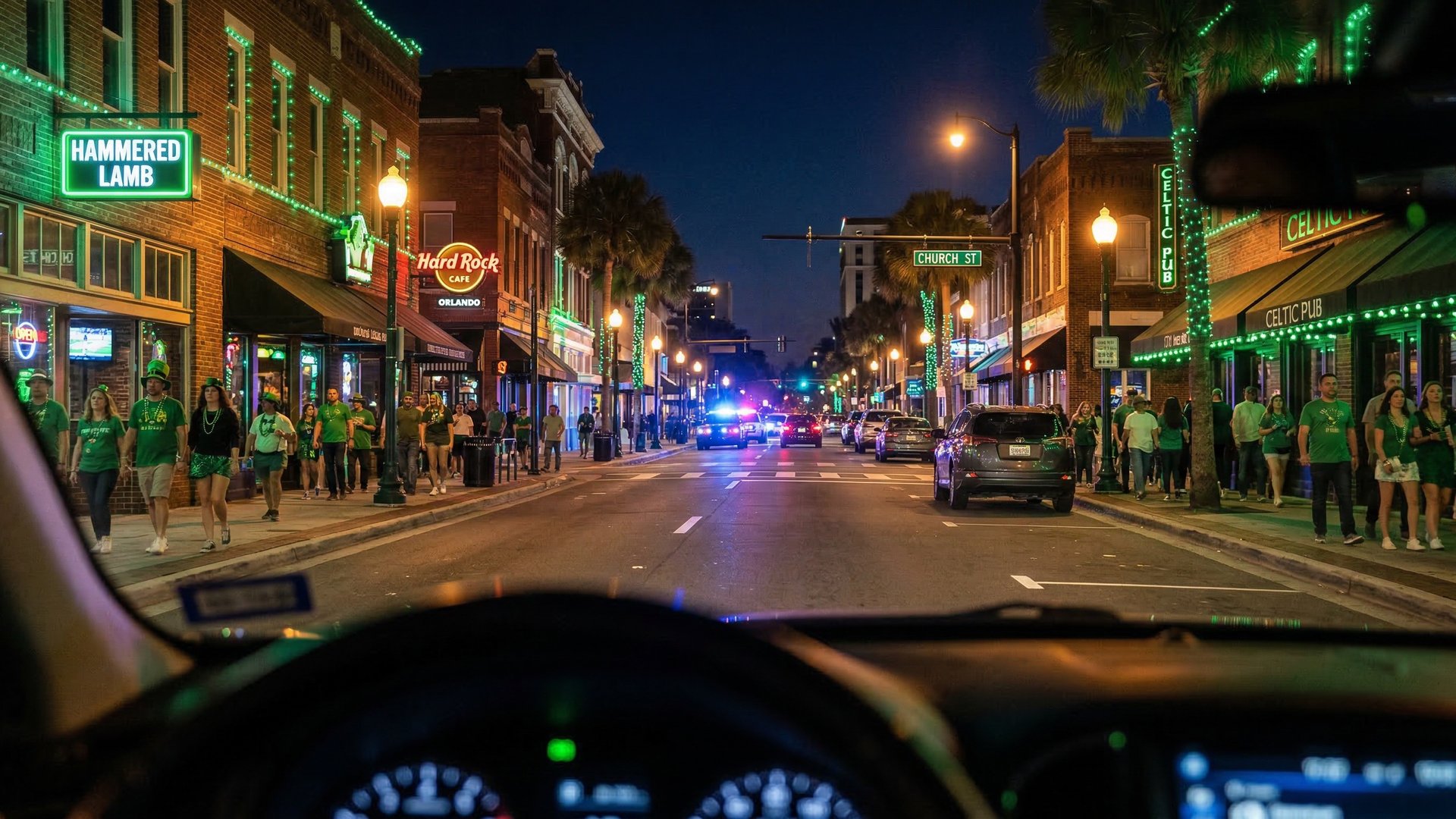
Every March 17, Central Florida law enforcement agencies deploy extra patrols, DUI checkpoints, and saturation units specifically targeting impaired drivers. St. Patrick's Day consistently ranks among the top three nights for DUI arrests in Florida -- right alongside New Year's Eve and the Fourth of July.
If you're planning to celebrate this year, here's what you need to know about the enforcement operation, your legal rights, and what happens if you're pulled over.
What Law Enforcement Does Differently on St. Patrick's Day
This isn't regular patrol. Central Florida agencies coordinate a targeted enforcement operation that begins in the afternoon and runs past last call:
The Enforcement Playbook
- Extra DUI patrols: Off-duty officers on overtime, dedicated to spotting impaired drivers. These aren't officers handling regular calls -- their only job is DUI enforcement.
- Saturation patrols: Concentrated units in high-traffic entertainment districts -- Wall Street Plaza, Church Street, International Drive, and the bar corridors in downtown Orlando.
- DUI checkpoints: Fixed locations where every driver (or every nth driver) is briefly stopped. Florida law permits checkpoints under specific constitutional guidelines.
- Bar-watch units: Officers positioned near parking lots of known bars and restaurants, watching for signs of impairment as drivers leave.
- Multi-agency coordination: OPD, Orange County Sheriff, Florida Highway Patrol, and smaller agencies all participate. FDLE often provides grant funding for overtime.
By the Numbers
In a typical St. Patrick's Day enforcement operation in Central Florida, agencies make 150-250 DUI arrests across the region in a single night. Many of those drivers had "only two or three drinks" and assumed they were fine to drive.
Your Rights at a DUI Checkpoint
DUI checkpoints are legal in Florida, but they must follow strict constitutional requirements. Knowing your rights can make a significant difference:
What You Must Do
- Stop when directed. You cannot legally drive through a checkpoint.
- Provide license and registration. Florida law requires you to identify yourself to law enforcement during a traffic stop.
What You Don't Have to Do
- Answer questions about drinking. "Have you been drinking tonight?" is an investigation question. You can politely decline: "I'd prefer not to answer questions."
- Perform field sobriety exercises. The walk-and-turn, one-leg stand, and HGN eye test are voluntary. There is no legal penalty for declining.
- Take a roadside breath test (PBT). The portable breath test at the scene is not the same as the official breath test at the station. The roadside PBT is voluntary.
The Implied Consent Warning
If you're arrested and taken to the station, you'll be asked to take an official breath test on the Intoxilyzer 8000 (or the newer Intoxilyzer 9000, depending on the station). Under Florida's implied consent law (F.S. 316.1932), refusing this test triggers an automatic one-year license suspension for a first refusal -- and the refusal itself can be used against you at trial. This is separate from the roadside PBT, which carries no such penalty.
What Officers Look For During a Stop
Whether it's a checkpoint or a regular traffic stop, officers are trained to look for specific "indicators of impairment." Some of these indicators have nothing to do with alcohol:
- Odor of alcohol: The most commonly cited indicator -- but perfume, mouthwash, and certain medications can produce similar smells
- Bloodshot, watery eyes: Also caused by allergies, fatigue, contact lenses, and wind exposure
- Slurred speech: Can result from fatigue, anxiety, medication, or medical conditions
- Fumbling with documents: Nervousness during a police stop is normal -- it's not proof of impairment
- Admissions: "I had a couple beers" becomes the strongest evidence in the case. This is why the right to remain silent matters.
Checkpoint Requirements: When They're Invalid
Not every checkpoint is legally valid. Florida courts have established specific requirements that agencies must follow:
Constitutional Checkpoint Requirements
- Supervisory authorization: A ranking officer (not a patrol officer) must approve the checkpoint plan in advance
- Neutral criteria: Officers can't pick which cars to stop based on hunches -- they must use a predetermined formula (every car, every third car, etc.)
- Adequate signage: Drivers must be warned that a checkpoint is ahead
- Minimal intrusion: The initial stop must be brief -- officers can't detain you for extended questioning without reasonable suspicion
- Safe conditions: Proper lighting, traffic management, and safety equipment are required
If any of these requirements aren't met, everything that follows -- the field sobriety exercises, the breath test, the arrest -- may be suppressible. This is one of the first things a defense attorney examines.
What to Do If You're Arrested
Immediate Steps
- Stay calm and be polite. Arguing with officers on the side of the road never helps your case -- but everything you say and do is being recorded.
- Exercise your right to remain silent. After identifying yourself, you don't have to answer investigative questions. "I'd like to speak with an attorney" is the safest response.
- Note the details. As soon as you can, write down everything: the time, location, what you ate and drank, what officers said and did, whether body cameras were visible.
- Request a DMV hearing within 10 days. Your license suspension begins automatically unless you or your attorney requests a formal review hearing with the DHSMV within 10 calendar days of arrest.
- Contact a DUI defense attorney. The 10-day clock for the license hearing and the nuances of checkpoint law mean early legal advice is critical.
Smart Alternatives for St. Patrick's Day
The easiest DUI defense is never needing one:
- Rideshare: Uber and Lyft surge pricing on St. Patrick's Day is still cheaper than a DUI
- Designated driver: The oldest solution still works
- Stay local: Walk to celebrations if you can -- downtown Orlando, Mills 50, and Winter Park all have walkable bar districts
- Wait it out: Your body metabolizes roughly one standard drink per hour. If you stopped drinking at midnight, you may still be impaired at 2 AM
The Morning-After Risk
Some of the most surprising DUI arrests happen the morning after. If you drank heavily until 2 AM and drive to work at 7 AM, you may still be over the legal limit. Alcohol metabolism varies by person, but the math is unforgiving -- a BAC of .16 at 2 AM could still be .08 or higher at 8 AM.
Bottom Line
St. Patrick's Day enforcement in Central Florida is a coordinated operation with extra officers, checkpoints, and bar-area patrols. The agencies announce it in advance because the goal is as much deterrence as arrest. But every year, hundreds of drivers are caught off guard.
If you're going out on March 17, plan your ride home before your first drink. And if you do get pulled over, remember: be polite, provide your ID, but you are not required to answer questions about drinking, perform field sobriety exercises, or take a roadside breath test. Those decisions can make all the difference in your defense.
Arrested for DUI on St. Patrick's Day?
You have 10 days to save your license. Call now for a free consultation -- we'll review the checkpoint procedures, body camera footage, and breath test evidence to build your defense.
Free Consultation: 407-500-7000Related Articles
Can a DUI Be Dismissed in Florida? 7 Ways to Beat Your Case
From illegal stops to breath test errors -- seven proven strategies for getting DUI charges dismissed.
Your Rights During a Traffic Stop in Florida
What you must do, what you can refuse, and how to protect yourself during any police encounter.
DUI Checkpoint Rights in Florida: What You Need to Know
DUI checkpoints are legal in Florida, but your rights don't disappear. Learn what officers can and cannot do at a sobriety checkpoint.
First DUI in Florida: Penalties and What to Expect
A complete guide to first-offense DUI penalties, license suspension, and how to fight your case.