Fleeing or Eluding in Florida: What the State Must Actually Prove
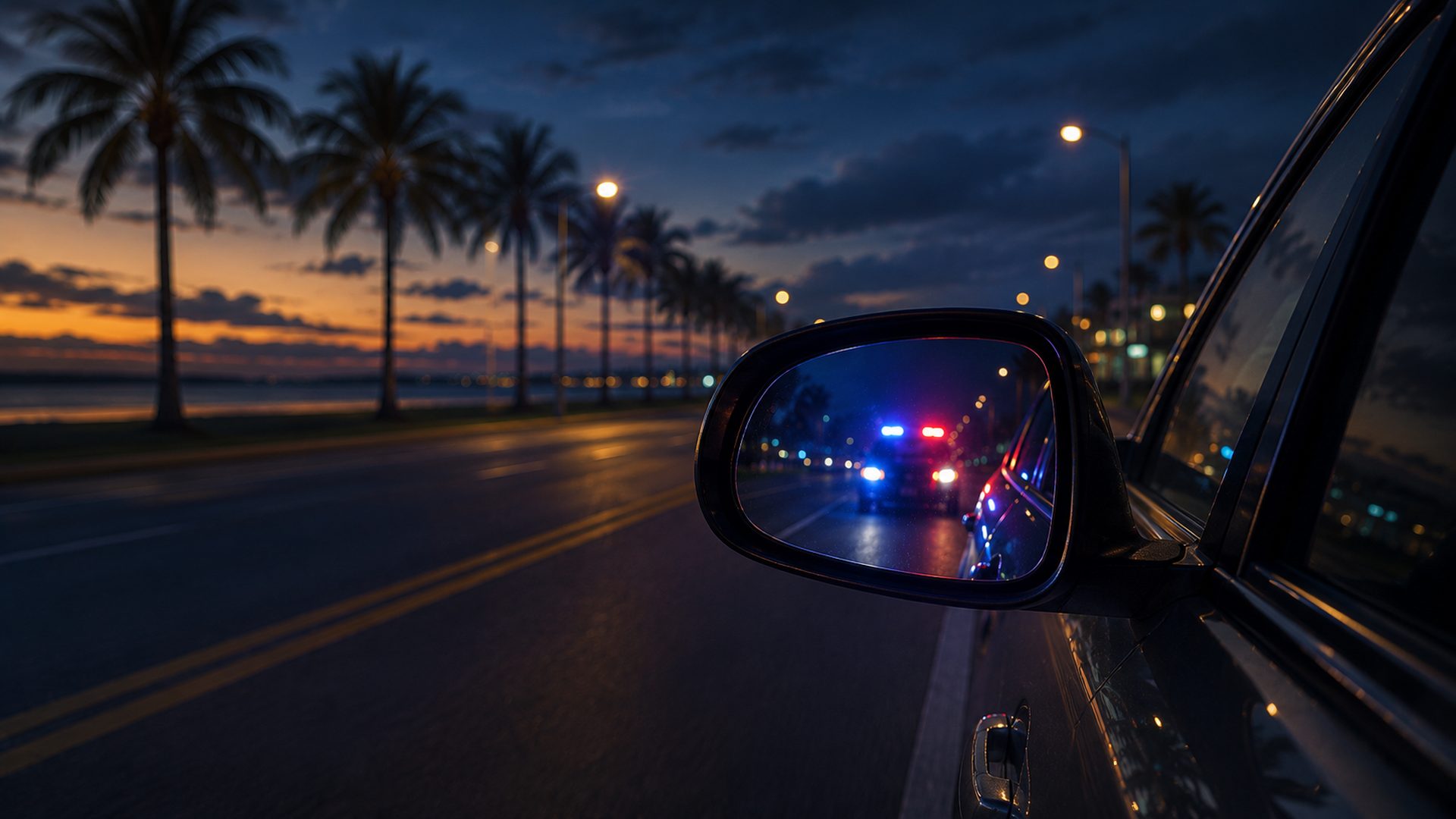
Lights flash in your mirror. Maybe you panic. Maybe you keep driving to a lit, safe place. Maybe you genuinely don't realize the unmarked car behind you is law enforcement. At what point does not stopping turn into a felony? In Florida, the answer hinges on a single word that the State often glosses over: knowledge.
This is Part 1 of a two-part series. Here we cover what fleeing or eluding actually requires under the statute and why the knowledge element is the heart of the defense. In Part 2, we'll look at how a chase squares against what officers are trained and ordered to do -- and why police increasingly carry tracking technology so they don't have to chase at all.
What the Statute Says
Fleeing or attempting to elude a law enforcement officer is governed by F.S. 316.1935, and it's a felony at every level. The charge escalates based on how the State says the driving unfolded:
The Escalation Ladder
- Base fleeing (third-degree felony): Having knowledge that a duly authorized officer ordered you to stop, willfully refusing or failing to stop -- or fleeing after you'd already stopped.
- Marked car, lights and siren (third-degree felony): Willfully fleeing an officer in a patrol vehicle with agency jurisdictional markings prominently displayed and both siren and lights activated.
- High speed or wanton disregard (second-degree felony): The same as above, but driving at high speed or in a manner showing wanton disregard for the safety of people or property.
- Serious injury or death (first-degree felony): High-speed or wanton-disregard fleeing that causes serious bodily injury or death to anyone -- including an officer in the pursuit -- carries a mandatory minimum of 3 years in prison.
The "Knowledge" Element: The Heart of the Case
Read the statute closely and the same two words appear: "knowledge" and "willfully." The State must prove the driver knew a duly authorized officer had ordered them to stop and then willfully refused. Fleeing is not a strict-liability crime. Panicking, being confused, or never realizing you were being signaled is not the same as willfully eluding.
Where Knowledge Breaks Down
- Unmarked vehicle. The higher tiers require prominent jurisdictional markings plus siren and lights. An unmarked car or plain clothes complicates whether you knew it was police.
- No -- or late -- lights and siren. If the signal wasn't given, or came moments before the stop, the "willful" refusal may never have happened.
- You didn't perceive the signal. Loud music, heavy traffic, weather, or distance can mean a driver genuinely didn't register the order.
- Driving to a safe place to stop. Continuing a short distance to a lit, populated, safe spot -- something drivers are widely advised to do -- is not the same as fleeing.
Because the line between an innocent failure to stop and a felony is so much about state of mind, these cases turn on the details of the stop -- what the officer did, when, and whether the driver could reasonably have known.
Aggravated Fleeing or Eluding
The statute also creates aggravated fleeing or eluding when someone flees in the course of unlawfully leaving the scene of a crash. If that fleeing causes injury or property damage, it's a second-degree felony; if it causes serious bodily injury or death, it's a first-degree felony with a mandatory minimum. Importantly, these are separate offenses that can be charged on top of the underlying leaving-the-scene charge -- so a single incident can stack multiple felonies.
Two Consequences That Catch People Off Guard
No Withhold of Adjudication -- By Law
For most charges, Florida lets a judge "withhold adjudication" to avoid a formal conviction. Not here. F.S. 316.1935 expressly says no court may suspend, defer, or withhold adjudication for any violation of the section. A conviction is a conviction -- which makes this charge far stickier than its everyday "traffic" label suggests. (For what a withhold normally does, see our post on why a withhold is not a conviction.)
- Driver's license revocation. A conviction requires the court to revoke your license for no less than 1 year and up to 5 years.
- Your vehicle can be seized. A car involved in a fleeing violation is deemed contraband and can be subject to forfeiture.
How These Cases Are Defended
Part 1 defenses live inside the statute's own elements:
Attacking the Elements
- No knowledge / no willfulness. The cornerstone -- show the driver didn't know they were being ordered to stop, or didn't act willfully.
- Markings, lights, and siren. For the enhanced tiers, the State must prove the marked vehicle and activated siren and lights. Body and dash camera footage either backs that up or it doesn't.
- Challenge "high speed" and "wanton disregard." These elevate the felony degree -- and they're often more about characterization than fact.
- Identity. In many fleeing cases, the car gets away; proving who was driving is its own hurdle.
Coming in Part 2: The Pursuit Itself
Proving the statutory elements is only half the picture. The other half is the chase -- and whether it should have happened at all. Officers are trained and bound by pursuit policies that tell them when to initiate a chase, when to terminate one, and how to weigh the danger. Increasingly, agencies equip officers with GPS "tag-and-track" tools, license-plate readers, and air support specifically so they can stop chasing and apprehend later. In Part 2, we'll dig into how a fleeing case squares against pursuit policy and training -- and what it means when an officer escalates a dangerous chase the policy told them to call off.
Charged With Fleeing or Eluding in Orlando?
This is a felony with no withhold and a mandatory license revocation -- but it hinges on what the State can actually prove about your knowledge and the stop. Call now for a free, confidential consultation.
Free Consultation: 407-500-7000Related Articles
Your Rights During a Florida Traffic Stop
What you must do, what you can decline, and how the stop shapes a fleeing case.
First-Time Reckless Driving in Florida: What to Expect
Where "wanton disregard" driving language comes from -- and how it's challenged.
Probable Cause in Florida: What It Means for Your Case
Why the reason for the stop -- and what the officer actually saw -- matters.
The Florida Criminal Punishment Scoresheet, Explained
How a third-, second-, or first-degree fleeing felony translates into sentence exposure.