Challenging the HGN Eye Test: How We Exclude Unreliable "Scientific" Evidence in DUI Cases
Published on by Jeff Lotter
If you've been arrested for DUI in Florida, there's a good chance the officer administered the Horizontal Gaze Nystagmus (HGN) test—the one where they move a pen or finger in front of your eyes and claim your eye movements indicate intoxication. What many people don't know is that this "test" is often inadmissible as scientific evidence in Florida courts.
At Lotter Law, we regularly file Motions in Limine to exclude HGN testimony before trial even begins. Here's how we protect our clients from this misleading evidence.
What Is the HGN Test?
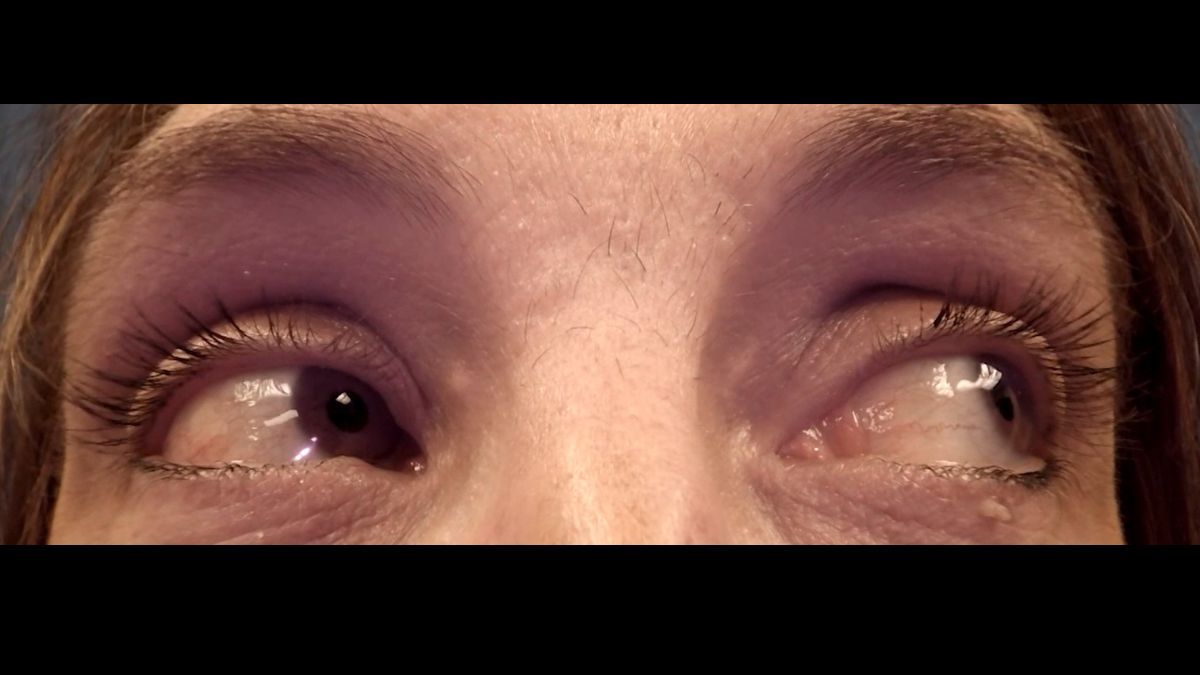
The Horizontal Gaze Nystagmus test is part of the Standardized Field Sobriety Tests (SFSTs). During this test, an officer moves a stimulus (like a pen) horizontally in front of your face and watches for involuntary jerking movements in your eyes—called nystagmus.
Officers are trained to look for three "clues" in each eye:
- Lack of smooth pursuit: Whether your eyes track the stimulus smoothly or jerkily
- Distinct nystagmus at maximum deviation: Whether your eyes jerk when looking to the side
- Onset of nystagmus prior to 45 degrees: Whether the jerking starts before your eyes reach a 45-degree angle
Officers claim that if they observe four or more "clues" out of six possible (three per eye), it indicates a blood alcohol concentration (BAC) of 0.08% or higher with "77% accuracy."
The Problem: HGN Is Scientific Evidence That Requires Special Proof
Unlike simple observations like smelling alcohol or seeing someone stumble, the HGN test relies on medical and physiological principles that aren't within a jury's common knowledge. In State v. Meador, 674 So. 2d 826 (Fla. 4th DCA 1996), Florida's appellate courts recognized that HGN testimony constitutes scientific evidence.
This distinction is critical. Before scientific evidence can be admitted in court, the State must prove:
- The underlying scientific principle and test are reliable
- The witness is qualified to administer and interpret the test
- The test was properly administered in this specific case
In most DUI cases, the State cannot meet these requirements.
Why Officers Aren't Qualified to Interpret HGN Results
Here's what most people don't realize: standard SFST training does not qualify officers to interpret the medical causes of nystagmus or attribute it to alcohol consumption.
Nystagmus can be caused by numerous factors unrelated to alcohol, including:
- Fatigue or lack of sleep
- Certain medications (prescription or over-the-counter)
- Caffeine or nicotine consumption
- Neurological conditions
- Eye problems or injuries
- Flashing police lights or other visual distractions
Unless the officer is a Drug Recognition Expert (DRE) with specialized medical training—which most aren't—they lack the expertise to testify about what caused the nystagmus they observed.
"The officer can describe what they saw, but they cannot tell a jury what it means without proper scientific foundation—and that foundation rarely exists."
Environmental Factors That Invalidate the HGN Test
Even if the HGN test were scientifically valid in laboratory conditions, roadside conditions almost never meet the strict requirements for reliability. The NHTSA manual itself states that environmental factors can invalidate the test.
Common problems we identify in body camera footage include:
- Flashing emergency lights: Bright, strobing lights directly in the subject's field of vision
- Uneven surface: Testing on slopes, gravel, or grass
- Traffic noise and distractions: Cars passing by, multiple officers talking
- Weather conditions: Wind, rain, or extreme temperatures
- Improper stimulus: Using a flashlight instead of a pen, or holding it at the wrong distance
When these conditions exist—and they almost always do—the test's claimed "77% accuracy" is completely meaningless.
What a Motion in Limine Accomplishes
A Motion in Limine is filed before trial to exclude prejudicial or inadmissible evidence. When we successfully argue this motion, the result is that:
- The officer cannot testify about "clues" or "points" scored on the HGN test
- The officer cannot use scientific terminology like "lack of smooth pursuit" or "onset prior to 45 degrees"
- The officer cannot claim the test indicates a specific BAC level
- The jury never hears about the supposed "77% accuracy" statistic
The officer can still describe what they did (moved a pen, observed eye movements) as part of their investigation, but they cannot dress it up as scientific evidence or suggest it proves intoxication.
The Strategic Advantage: Preserving Cross-Examination While Limiting Prejudice
One of the key aspects of our Motion in Limine strategy is that we don't seek to exclude all mention of the HGN. Instead, we allow the officer to describe their basic observations while stripping away the false scientific veneer.
This approach gives us two advantages:
- We prevent the jury from being misled by pseudo-scientific testimony that sounds authoritative but lacks proper foundation
- We preserve our ability to cross-examine the officer about how poorly they administered the test, creating credibility issues that benefit our client
If the officer claimed in their report to have followed standardized procedures "by the book," but the body camera footage shows flashing lights, improper positioning, or other deviations, we can use that to demonstrate the officer's lack of truthfulness and attention to detail.
Real Case Example: Proving False Observations
Recently, we were able to use the officer's body camera footage to prove that what the officer claimed he observed simply didn't happen. The officer's report stated he observed clear signs of nystagmus—involuntary jerking of the eyes. However, when we conducted a frame-by-frame analysis of the body camera footage, we could clearly see that the defendant's eyes were not twitching.
The officer had checked boxes claiming he observed specific HGN clues, but the video evidence proved otherwise. This wasn't a case of improper administration or environmental factors—this was a case of an officer reporting observations he never actually made.
When confronted with this evidence, the prosecution's case collapsed. If the officer was willing to falsely report what he observed during the HGN test, how could the jury trust anything else in his testimony? The HGN evidence was excluded, and the credibility of the State's key witness was destroyed.
The Deeper Problem: Officers Reporting "Clues" They Never Tested
Here's something most people—and even many attorneys—don't know: officers routinely check boxes on their DUI forms indicating the driver "failed" specific HGN clues that the officer never actually tested for.
The HGN test has three distinct components that must be administered separately:
- Lack of smooth pursuit: Requires slowly moving the stimulus across the full range of vision
- Distinct nystagmus at maximum deviation: Requires holding the stimulus at the far edge of vision for several seconds
- Onset prior to 45 degrees: Requires slowly moving the stimulus and watching for the angle where jerking begins
Each component requires specific movements, timing, and observation techniques. When we review body camera footage frame-by-frame, we frequently discover that the officer:
- Never held the stimulus at maximum deviation long enough to observe "distinct nystagmus"
- Moved the stimulus far too quickly to accurately determine the "onset angle"
- Didn't follow the required sequence or skipped components entirely
- Yet still checked all six boxes claiming the driver failed all six clues
This Isn't a Mistake—It's a Pattern
In many cases, officers appear to be filling out standardized forms based on the assumption that anyone they're arresting "must have failed" all the tests, rather than accurately documenting what they actually observed. This is either gross incompetence or deliberate dishonesty—and either way, it destroys the officer's credibility.
Why Most Attorneys Miss This
While many DUI defense attorneys know how to file a Motion in Limine to exclude HGN evidence on Meador grounds, far fewer attorneys have the detailed technical knowledge of HGN administration required to catch officers in false reporting.
At Lotter Law, our approach is different. Attorney Jeff Lotter spent five years as a Florida State Trooper assigned to the DUI Squad, where he made over 1,000 DUI arrests and earned certification as a Drug Recognition Expert (DRE). He was qualified as an expert witness and testified in court about the specific details of HGN administration and interpretation.
This law enforcement background means we know exactly how HGN is supposed to be administered because we've done it hundreds of times. We know what shortcuts officers take because we've seen them. We know what the reports should say versus what they actually say because we've written them. This inside knowledge is invaluable when analyzing whether an officer is truthfully reporting their observations.
Identifying these discrepancies requires:
- In-depth knowledge of NHTSA protocols: Understanding exactly how each clue must be tested
- Frame-by-frame video analysis: Counting seconds, measuring stimulus position, tracking eye movements
- Comparison with written reports: Cross-referencing what the officer claimed versus what the video shows
- Recognition of patterns: Understanding which shortcuts officers commonly take
At Lotter Law, we don't just argue that HGN should be excluded as scientific evidence—we also scrutinize whether the officer is being truthful about what they observed. When we catch an officer claiming to have seen "clues" they couldn't possibly have tested for, it becomes a powerful tool for impeachment that goes far beyond just the HGN evidence itself.
"If an officer is willing to check boxes claiming they observed something they never actually tested for, what else in their report is inaccurate? This goes to the heart of their credibility as a witness."
The Impeachment Value: Beyond Just HGN
When we expose false HGN reporting during cross-examination, the damage extends far beyond just that one piece of evidence. We can argue to the jury:
- If the officer falsified the HGN results, what else in the report is unreliable?
- If the officer can't accurately document what happened during the stop, how can we trust their other observations?
- If the officer claims to follow "standardized procedures" but clearly doesn't, are they trustworthy?
This type of impeachment can undermine the prosecution's entire case, not just the HGN evidence. It transforms the officer from an authoritative expert into a witness with serious credibility problems.
The Advantage of Perspective from Both Sides
Having administered HGN tests hundreds of times as a State Trooper and DRE, and having testified as an expert witness about HGN procedures, our firm brings a unique perspective to DUI defense. We don't just read about how these tests should work—we know from experience how they're actually conducted in the field, what mistakes officers make, and what patterns of false reporting look like. This insider knowledge gives our clients a significant advantage that most defense attorneys simply cannot provide.
Why This Matters for Your DUI Defense
Juries tend to give great weight to anything that sounds "scientific." When an officer testifies about nystagmus, clues, and statistical accuracy, jurors may believe they're hearing objective, medical evidence—even though they're not.
By excluding HGN testimony as scientific evidence, we:
- Remove a potentially powerful prosecution tool
- Prevent the jury from being misled by unreliable "science"
- Level the playing field
- Force the State to rely on actual, reliable evidence
"The State cannot dress up an officer's subjective observations in a lab coat and call it science. If they want to introduce scientific evidence, they need to prove it's scientifically valid—and they usually can't."
Other Field Sobriety Tests: What About Walk-and-Turn and One-Leg Stand?
Unlike the HGN test, the walk-and-turn and one-leg stand exercises are generally considered "psychomotor" tests based on divided attention tasks. These don't rely on medical or physiological principles in the same way, so they're usually admissible as lay observations.
However, that doesn't mean they can't be challenged. We regularly attack these tests by showing:
- The officer didn't properly demonstrate the test
- The instructions were confusing or incomplete
- The roadside conditions made the test unfair (uneven surface, poor lighting)
- The defendant has physical limitations (injuries, age, weight, footwear)
- The officer's scoring was subjective and inconsistent with the video evidence
What Should You Do If You're Facing DUI Charges?
If you've been arrested for DUI in Orlando, Orange County, or anywhere in Central Florida, and the officer administered the HGN test, you need an attorney who knows how to challenge this evidence effectively.
At Lotter Law, we:
- Conduct frame-by-frame analysis of all body camera and dashcam footage
- Compare officer reports against video evidence to identify false claims
- Apply detailed knowledge of NHTSA protocols to catch officers who didn't follow proper procedures
- Identify environmental factors and deviations from standardized testing requirements
- File strategic Motions in Limine to exclude unreliable scientific evidence
- Prepare devastating cross-examination that exposes officer dishonesty and incompetence
- Use data-driven analysis to find patterns and weaknesses in the State's case
We don't just accept the State's evidence at face value. We go deeper than most attorneys—scrutinizing not just whether HGN should be excluded, but whether officers are truthfully reporting what they observed. This level of detailed analysis often reveals credibility problems that can undermine the prosecution's entire case.
The Bottom Line
The HGN eye test may look scientific, but under Florida law, it must meet strict evidentiary standards before it can be presented as scientific evidence to a jury. In most cases, those standards aren't met.
But our defense strategy doesn't stop there. We also conduct detailed video analysis to determine whether officers are falsely reporting observations they never actually made. This two-pronged approach—excluding unreliable scientific evidence and exposing officer dishonesty—gives our clients the strongest possible defense.
By filing a Motion in Limine to exclude HGN testimony, we protect our clients from misleading evidence while preserving the ability to impeach the officer's credibility through devastating cross-examination. It's a powerful defensive tool—and one that requires deep knowledge of the science, the law, and the tactical shortcuts officers commonly take.
If you're facing DUI charges and want to know whether the HGN evidence in your case can be challenged, contact Lotter Law for a free consultation. We'll review your case, analyze the evidence, and develop a strategic defense tailored to your specific situation.
Key Takeaways
- The HGN test is scientific evidence under Florida law and requires special proof of reliability
- Most officers lack the qualifications to interpret what nystagmus means
- Officers routinely report "clues" they never actually tested for—either through incompetence or dishonesty
- Frame-by-frame video analysis can expose false reporting and destroy officer credibility
- Roadside conditions almost never meet the requirements for test validity
- A Motion in Limine can exclude HGN testimony while preserving cross-examination opportunities
- Catching false HGN reporting can undermine the prosecution's entire case, not just the HGN evidence
Learn More: For a comprehensive overview of DUI defense strategies in Florida, see our Complete Guide to DUI Defense.
This article is for informational purposes only and does not constitute legal advice. Every case is different, and outcomes depend on the specific facts and circumstances. If you're facing criminal charges, consult with a qualified attorney about your specific situation.